
From discarded scraps to beautiful, contemporary fashion.
Built by Ashita Singhal — Paiwand Studio
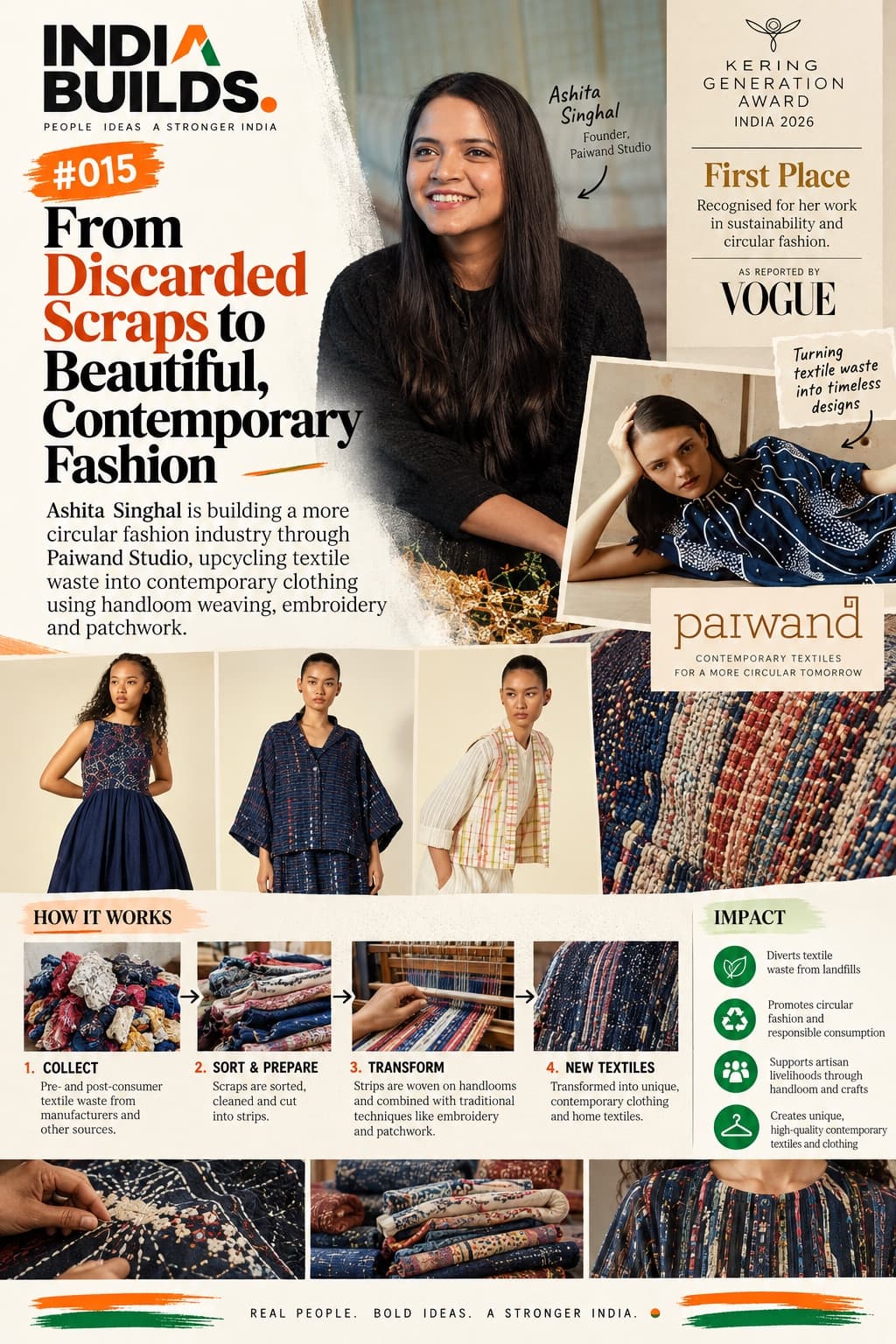
Paiwand Studio turns discarded textile scraps into new fabrics and contemporary clothing through handloom weaving, embroidery and patchwork.
While studying fashion design, Ashita Singhal watched strips of fabric fall to the floor during pattern cutting and get swept away. She began experimenting with those remnants instead of treating them as the inevitable waste of making clothes.
Paiwand grew from that graduation project and was launched in November 2018. Its name comes from the phrase 'paiwand lagana' — to patch or repair — and captures the studio's belief that forgotten pieces can hold new value.
The studio works with textile scraps sourced through export houses, rag pickers, markets and collaborators. The material is sorted by colour and fabric type, cleaned and cut into strips before being joined into longer lengths and prepared on bobbins.
For handloom weaving, these strips can replace conventional weft yarn. For embroidery, waste strips can be threaded into the needle instead of virgin yarn. Paiwand also uses patchwork and other handcrafted techniques to turn irregular remnants into new textiles for apparel and home furnishings.
Because every incoming bundle of waste is different, the material helps determine the final design. Colour, fibre, texture and quantity shape what can be woven, embroidered or patched rather than a fixed design dictating newly produced fabric.
That approach joins circular design with Indian craft knowledge. The work gives discarded material another life while creating opportunities for the weavers and artisans who transform it into contemporary textiles.
On 13 October 2026, Paiwand Studio won first place in the inaugural Kering Generation Award India. Vogue reported that the Noida-based studio was recognised for transforming pre-consumer garment waste into new handloom fabric and embroidery.
The first-place award included €50,000, mentorship and access to Kering's network, design and production teams. For Paiwand, the recognition opens a path toward new customers and the demanding fashion and luxury supply chains where craft, quality and circular materials can meet.
Paiwand does not hide waste beneath the finished product. It makes the history of the material part of the design — transforming scraps into distinctive fabrics, garments and furnishings rather than trying to imitate mass-produced sameness.
It is a compelling Indian model for circular fashion: begin with what already exists, build with local skill and prove that responsible consumption can still produce work that is contemporary, beautiful and commercially relevant.